


Woad Dye
Woad Dye
Couldn't load pickup availability


Description
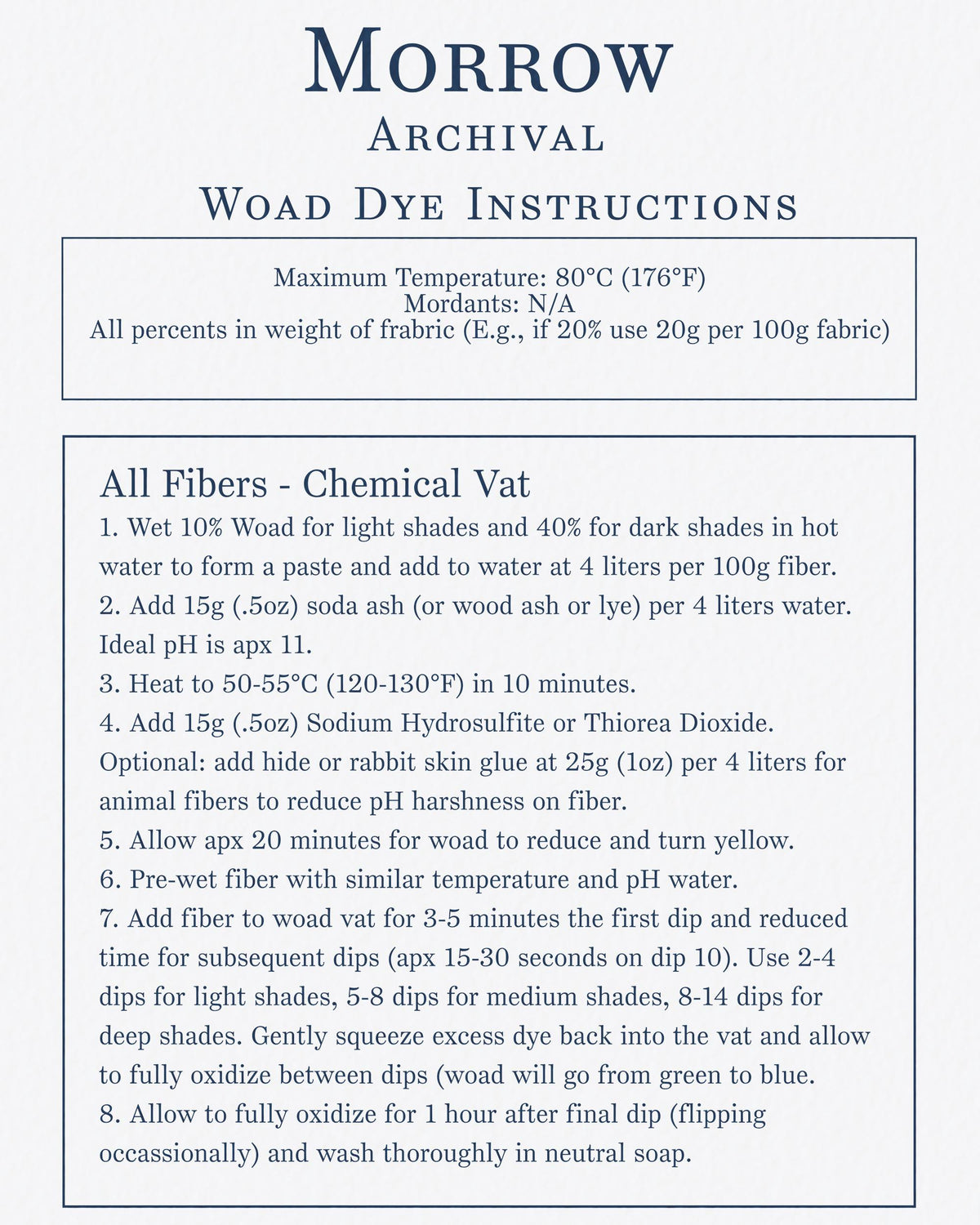
Woad Dye is a historic natural colorant extracted from the leaves of Isatis tinctoria, a flowering plant cultivated across Europe and Central Asia for over two millennia. Like indigo, woad contains the blue dye indigotin, but in lower concentrations, producing beautiful shades of dusty blue, slate, and soft sky tones. Woad is especially valued for its subtle character and its place in early European textile traditions. The dye requires a reduction vat and bonds to fibers as it oxidizes in the air. It is gentle on delicate fibers and often chosen for historical reenactment and heritage crafts.
Recommended Use
Use at 10 to 20% WOF for medium to strong shades. Requires reduction (typically with soda ash and thiourea dioxide or other natural reducers) and an alkaline environment. Works best with repeated dips to build color and improve fastness. Suitable for protein and cellulose fibers including wool, silk, linen, and cotton. Can be used alone or layered with indigo for complex blues.
Historical Significance
Woad was the main blue dye of Europe before tropical indigo arrived in quantity in the 16th and 17th centuries. Julius Caesar wrote that the Britons colored themselves blue with vitrum, a word often read as woad. Through the Middle Ages, woad was central to textile production in regions like France, Germany, and England, and it brought great wealth to growing regions such as Toulouse and Thuringia. The ancient process of extracting and fermenting woad leaves, though time consuming, is one of the earliest and most storied dye traditions in Western history.
Dye Details
Name: Indigotin from Isatis tinctoria
Origin: Europe or Central Asia (varies by batch)
Dye Type: Fermented botanical extract
Recommended Fibers: Wool, silk, linen, cotton, and blends
Lightfastness: Excellent on protein fibers, good on cellulose
Vat Ingredients:
Reducing agent (thiourea dioxide, or stale urine for traditionalists)
Alkaline agent (soda ash or lime)
Warm water (120 to 140°F / 50 to 60°C) for activation
Optional: natural fermentation additives like wheat bran or madder root for heritage vats
Packaging
Available in resealable, eco friendly kraft pouches with historical and modern vat instructions included.
Health and Safety
- For art use only. Not for cosmetic, food or children's use.
- Keep out of reach of children and pets. Do not eat, drink or smoke while working.
- Avoid creating or breathing dust. Work in a ventilated area and wear a NIOSH approved dust respirator (P100 or better) when handling dry pigment.
- Wear gloves and eye protection. Wash hands and work surfaces after use, and never rinse pigment into drains.
- Do not spray apply, sand or burn.
- If swallowed or if you feel unwell, contact a poison control center (U.S. 1-800-222-1222) or a doctor.
- Safety Data Sheet available on request.
Wow what an incredible seller, item and customer service. This is a 5 star plus experience! Super grateful for all of the help, hand holding and info when I dyed this drum skin. 10/10 if you need woad, come here !
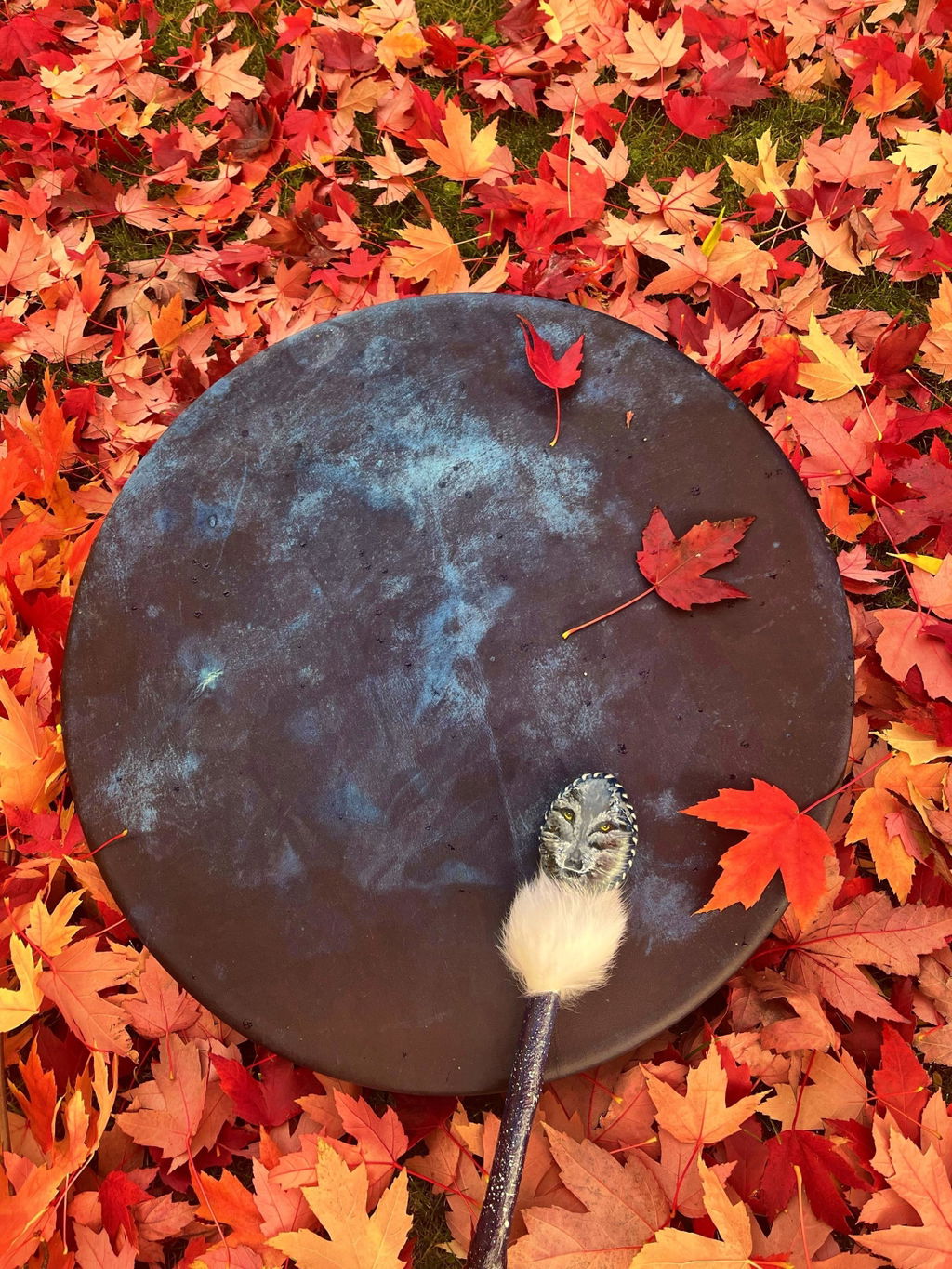
Awesome dye, very helpful customer service.
WOW is all I have to say - what a stunning blue color!!!! Beautiful in every way. Thank you so much!!!
Received another much larger order that was again top quality and fast shipping.