


Weld Dye
Weld Dye
Couldn't load pickup availability


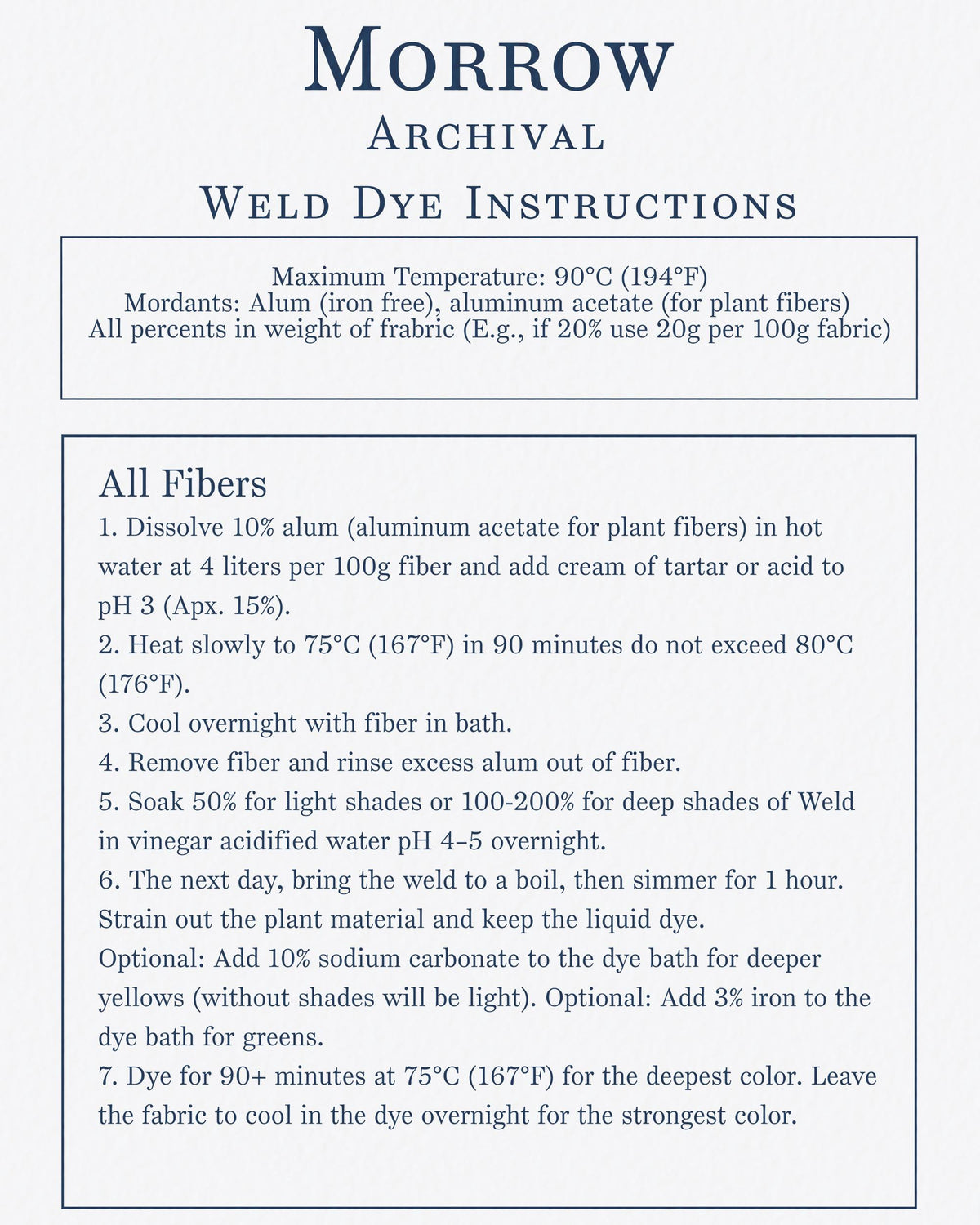
Description
Weld, from the flowering stalks of Reseda luteola, is one of the oldest and most lightfast natural yellow dyes known. It yields a clear, luminous yellow, ranging from soft lemon to bold sunflower tones depending on concentration and mordant. Unlike golden or earthier yellows, weld is celebrated for its cool, bright character and remarkable brilliance, especially on protein fibers. It bonds strongly to wool, silk, and cotton, and layers beautifully with indigo or woad for the traditional greens of medieval tapestries.
Recommended Use
Use at 100 to 200% WOF depending on desired strength. Soak the dried plant material overnight, then heat gently at about 160 to 180°F (70 to 80°C) for 60 to 90 minutes and strain before dyeing. Avoid boiling, which dulls the yellow. Works exceptionally well with alum mordant. For cellulose fibers, use a tannin pre treatment followed by alum for best results. Cream of tartar softens the tone, while chalk brightens and deepens it.
Historical Significance
Weld was the principal yellow dye in Europe from antiquity through the 18th century, before synthetic dyes emerged. Its seeds have been found at prehistoric sites in Europe, and it was used by Roman dyers and throughout the Middle Ages in fine textile production. It colored the linens of nobility and church vestments alike, favored for its purity and stability. As a lake pigment, called arzica, weld also gave painters and manuscript illuminators a clear yellow.
Dye Details
Name: Luteolin from Reseda luteola
Origin: Europe and the Mediterranean Basin
Dye Type: Botanical whole plant dye
Recommended Fibers: Wool, silk, cotton, linen, hemp, and other natural fibers
Lightfastness: Excellent on all fibers
Mordants & Modifiers:
Alum: bright lemon to sunflower yellow
Cream of Tartar: softens and slightly warms tone
Chalk (Calcium Carbonate): brightens and deepens
Iron: soft olive, moss, and muted greens
Copper: duller greens and olive golds
Overdyed with Indigo: traditional leaf and forest greens
Packaging
Available in resealable, eco friendly kraft pouches with full instructions for extraction and traditional medieval recipes.
Health and Safety
- For art use only. Not for cosmetic, food or children's use.
- Keep out of reach of children and pets. Do not eat, drink or smoke while working.
- Avoid creating or breathing dust. Work in a ventilated area and wear a NIOSH approved dust respirator (N95 or better) when handling dry pigment.
- Wear gloves and eye protection. Wash hands and work surfaces after use, and never rinse pigment into drains.
- Do not spray apply, sand or burn.
- If swallowed or if you feel unwell, contact a poison control center (U.S. 1-800-222-1222) or a doctor.
- Safety Data Sheet available on request.