


Verdigris Fine Pigment
Verdigris Fine Pigment
Couldn't load pickup availability


Description
Verdigris is a handmade single pigment made through a historical process of exposing copper to acetic acid, resulting in a brilliant bluish green patina. This pigment, chemically known as copper acetate, has been highly prized for its vivid, translucent color and strong tinting properties. However, it is known to be chemically unstable, prone to darkening over time when exposed to air and moisture. Our Fine Verdigris is ground much finer than our Coarse Verdigris for a more subtle and beautiful speckled look when used in watercolor or as an oil glaze.
Verdigris has moderate lightfastness, making it suitable for classical and historical artwork where its brilliant hue can be preserved with proper varnishing and protective techniques. It blends seamlessly with other pigments, offering intense, jewel like greens and blues in painting. Its high translucence allows for exquisite glazing and layering effects in oil, watercolor, and tempera applications. Compared to natural greens such as Malachite, Verdigris provides a more vibrant and cool toned hue, though it requires careful handling to maintain its brightness over time.
History
Verdigris has been used as a pigment for over two thousand years, admired for its intense greenish blue hue and unique patina effect.
During antiquity, the Greeks and Romans produced Verdigris by suspending copper plates over vinegar vapors, allowing the reaction to create a rich green coating. It was widely used in frescoes, decorative arts, and early manuscripts, though its tendency to darken was noted even then.
In the Middle Ages and Renaissance, Verdigris became a dominant green pigment in European painting, frequently used in illuminated manuscripts, religious iconography, and oil painting. Artists such as Jan van Eyck and Leonardo da Vinci employed Verdigris for its brilliant glazing effects, particularly in drapery and foliage. However, it was notorious for its tendency to react with other pigments, sometimes causing irreversible discoloration. In the pictured artwork 'The Ansidei Madonna' by Raphael, Verdigris is used throughout the background, cloth elements, and as a glaze for the various greens and green yellows of the painting in combination with various yellows such as Lead-Tin Yellow.
By the 18th and 19th centuries, Verdigris was gradually replaced by more stable synthetic greens, such as Viridian and Chrome Green, which offered similar brilliance without the risk of degradation. However, it continued to be used in traditional restoration work and historical pigment reconstructions.
Today, Verdigris remains a valued pigment for conservators, icon painters, and historical artists who appreciate its luminous beauty and historical significance. Modern varnishes and preservation techniques help mitigate its instability, allowing its brilliant color to endure.
Pigment Information
Pigment Type: Synthetic (Copper Acetate)
Source: Verdigris (copper salts formed through the oxidation of copper)
Origin: China
Suitable Mediums: Watercolor, Oil, Tempera, Acrylic
Lightfastness: Acceptable (prone to darkening over time)
Opacity: High translucence
Other Names: Copper Acetate, Spanish Green, Aerugo, Acetate of Copper
Color Index Code: PG20
Image: 'The Ansidei Madonna' by Raphael from the National Gallery
Health and Safety
- For art use only. Not for cosmetic, food or children's use.
- Keep out of reach of children and pets. Do not eat, drink or smoke while working.
- Avoid creating or breathing dust. Work in a ventilated area and wear a NIOSH approved dust respirator (P100 or better) when handling dry pigment.
- Wear gloves and eye protection. Wash hands and work surfaces after use, and never rinse pigment into drains.
- Do not spray apply, sand or burn.
- If swallowed or if you feel unwell, contact a poison control center (U.S. 1-800-222-1222) or a doctor.
- Safety Data Sheet available on request.
Caution: Contains copper. Harmful if swallowed. Dust may irritate eyes and airways. Very toxic to aquatic life; never rinse into drains.
My pigment came in a square jar. I didn't like that because — having the pigment be so fine, it ended up getting caught in the corners of the jar and I wasn't able to get it out. I ended up transferring the pigment into a round jar for my convenience, and ended up losing about a quarter gram of pigment in the process. This pigment was a little gritty; I estimate maybe around 80 µm or so just by the feel of it under my mullerIt eventually blended into a beautiful vibrant teal. Well worth it!
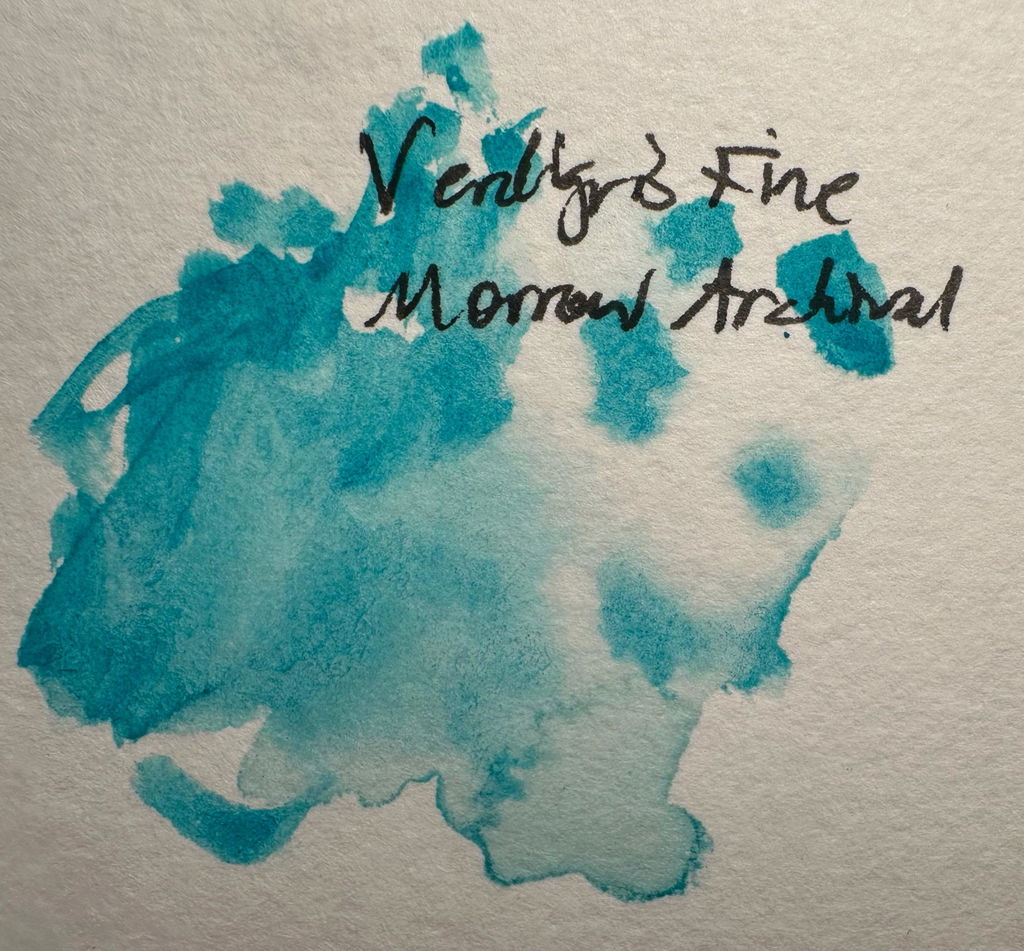
Beautiful color! We can’t wait to use it!
This is great, just as expected.
While the quality is great, the color of this pigment completely changed when added to an encaustic medium. It ended up being this mossy green instead of a blue green. I was disappointed but I should ask about that before because seller was wonderful about explaining each pigment.
Beautiful pigment and very fine grind. It's very difficult to find verdigris online that isn't insanely rough and crystalline for use with oil paint.
Great item but be aware that the weights can be deceiving since pigments can be quite heavier then what you may be used too. For instance, I ordered 10 grams of this pigment which translated into about a teaspoon or so of actual pigment due to its weight.