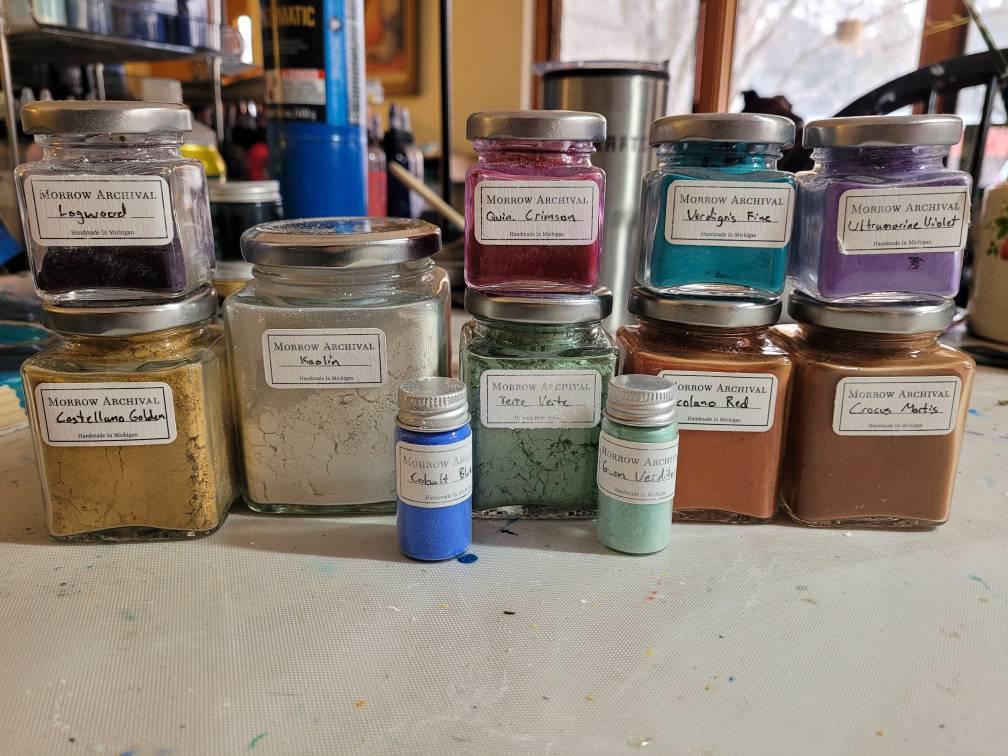


Ultramarine Violet Pigment
Ultramarine Violet Pigment
Couldn't load pickup availability


Description
Ultramarine Violet (PV15) is a handmade single pigment ultramarine violet, a modern synthetic extension of the ultramarine family. It produces a soft, transparent violet with a distinctly blue leaning, smoky undertone and a gentle, low chroma masstone. Compared to bright quinacridone and dioxazine violets, this pigment is quieter and more mineral, offering a calm, atmospheric violet that feels closer to stone and shadow than to neon purple.
In use, Ultramarine Violet gives a delicate, transparent to semi-transparent color ideal for florals, distant hills, twilight skies, reflective shadows, and subtle atmospheric passages in both landscape and figurative work. It has low to moderate tinting strength and often a lightly granulating character (especially in watercolor), making it excellent for layered washes, veil like glazes, and soft transitions. It mixes beautifully with blues for gentle blue violets and cool shadows, with earths for muted mauves and lavender grays, and with warm reds and pinks for refined, rose violet tones that stay understated rather than overpowering.
This ultramarine pigment is generally low in toxicity, highly lightfast, and compatible with a wide range of binders and mediums. In artist's colors it serves as a subtle, mineral violet that can function as a primary quiet purple on the palette, a low key alternative to high chroma violets, or a key mixer for palettes that favor nuance, atmosphere, and softly shifting shadow color.
History
Synthetic ultramarine was first developed in the early 19th century as an affordable replacement for natural lapis lazuli blue. By adjusting the composition and firing conditions of the sodium aluminosilicate sulfur mixture, chemists discovered they could shift the hue from deep blue toward redder and more violet tones. From this work emerged what is now known as Ultramarine Violet (PV15), along with related red- and blue shade ultramarines.
Initially produced for coatings, printing inks, and decorative applications, ultramarine violets soon attracted paintmakers and artists who wanted a gentle, stable violet for shadows and atmospheric work. Unlike some earlier violets, PV15 offered excellent lightfastness and a quiet, mineral character that harmonized well with traditional earths and ultramarine blues. Today, Ultramarine Violet is a staple in many professional watercolor, oil, and acrylic ranges, appreciated by painters who prefer a restrained, naturalistic violet over more intense, high chroma purples.
Pigment Information
Pigment Type: Synthetic (Inorganic) ultramarine pigment (complex sodium aluminosilicate with sulfur)
Source: Synthetic ultramarine blue heated with ammonium chloride in air
Origin: Europe (late 19th century)
Suitable Mediums: Watercolor, Oil, Tempera, Acrylic, Lime / Fresco, Ceramic and cement applications
Lightfastness: Excellent
Opacity: Transparent
Other Names: Ultramarine Violet, French Ultramarine Violet, PV15
Color Index Code: PV15
Health and Safety
- For art use only. Not for cosmetic, food or children's use.
- Keep out of reach of children and pets. Do not eat, drink or smoke while working.
- Avoid creating or breathing dust. Work in a ventilated area and wear a NIOSH approved dust respirator (P100 or better) when handling dry pigment.
- Wear gloves and eye protection. Wash hands and work surfaces after use, and never rinse pigment into drains.
- Do not spray apply, sand or burn.
- If swallowed or if you feel unwell, contact a poison control center (U.S. 1-800-222-1222) or a doctor.
- Safety Data Sheet available on request.
Color is stunning when mixed with encaustic medium. Shipping took longer than expected then one item shattered in the box creating a major mess on all the other bottles. Otherwise this color was beautiful and bottled tightly