


Prussian Blue Pigment
Prussian Blue Pigment
Couldn't load pickup availability


Description
Prussian Blue is a deep, powerful synthetic blue pigment made from ferric ferrocyanide. It produces an intense greenish-blue to deep navy color with exceptional tinting strength and a distinctive inky depth. In masstone it can appear nearly black-blue, while in thin washes it opens into clear, transparent blue tones ranging from cool sky blue to rich steel blue.
As a pigment, Prussian Blue is valued for its strong tinting power, transparency, and ability to create deep shadows, atmospheric blues, cool greys, and intense blue mixtures. It is far stronger than most historical mineral blues such as azurite or natural ultramarine, meaning only a small amount is needed to color a mixture. It mixes beautifully with yellows to create strong greens, with earth pigments for blue-greys and stormy neutrals, and with reds or violets for deep shadow tones.
Prussian Blue is especially useful in watercolor, oil, ink, and printmaking because of its staining strength and transparent character. It can create luminous glazes, dark blue-black passages, and delicate diluted washes. Compared with Ultramarine, Prussian Blue is greener, darker, more transparent, and much stronger in tinting strength. Compared with Phthalo Blue, it is less aggressively bright and has a more historical, atmospheric character.
History
Prussian Blue was discovered in Berlin in the early 18th century and is widely considered the first modern synthetic blue pigment. Its invention transformed painting, printing, textiles, and decorative arts by providing artists with a strong, affordable blue at a time when natural ultramarine from lapis lazuli was extremely expensive and azurite could be difficult to use reliably.
The pigment quickly spread across Europe and became one of the most important blues of the 18th and 19th centuries. Artists valued it for its depth, transparency, and powerful tinting strength. It was used in oil painting, watercolor, manuscript work, prints, wallpapers, textiles, and later industrial coatings. Its availability greatly expanded the range of blues accessible to artists outside the most expensive commissions.
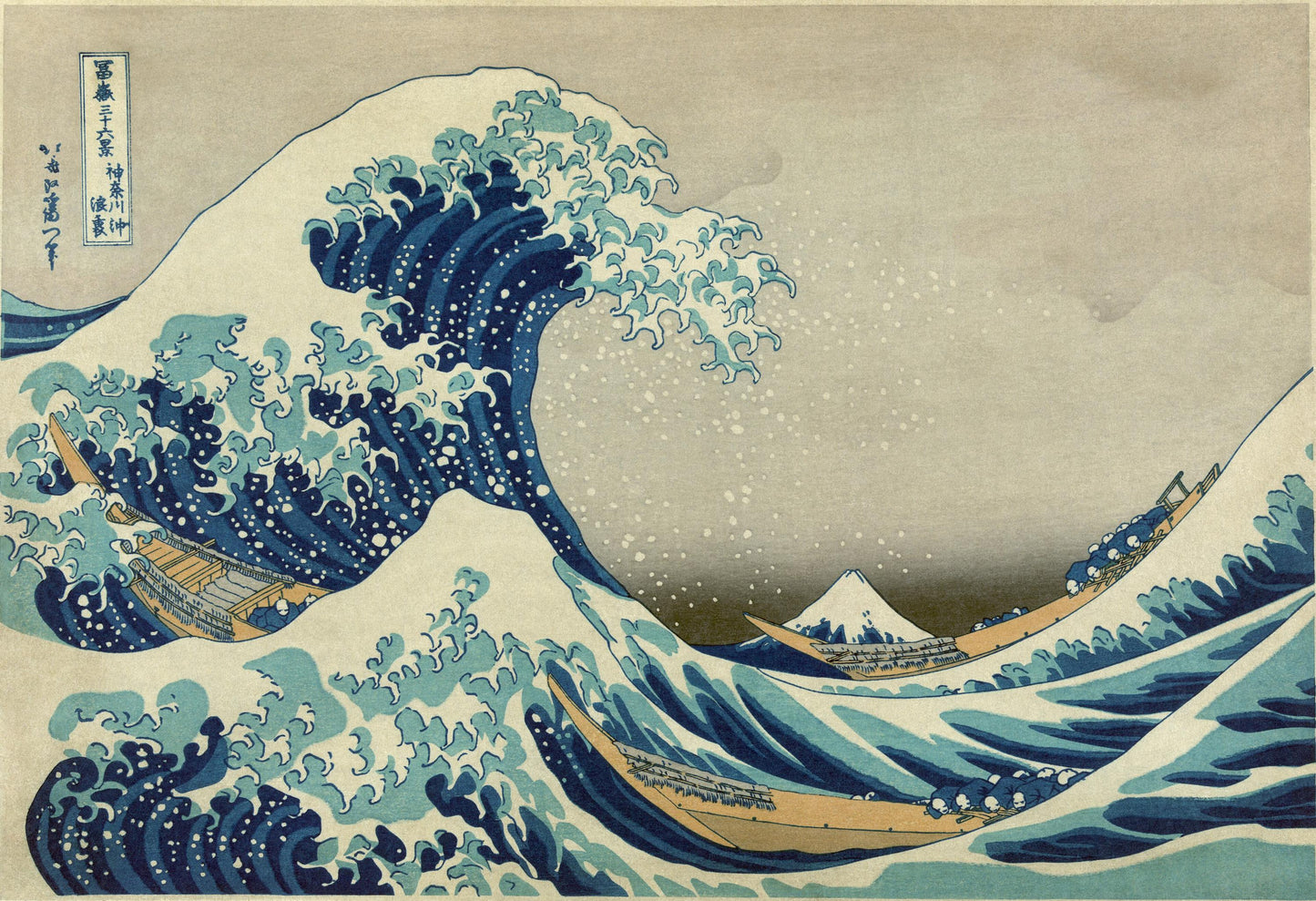
Prussian Blue was especially important in watercolor and printmaking. In Japan, imported Prussian Blue became central to ukiyo-e woodblock printing, where it helped create the intense blues seen in many 19th-century prints. Katsushika Hokusai’s “The Great Wave off Kanagawa” famously uses Prussian Blue, demonstrating the pigment’s global reach and its role in changing the visual language of blue.
In European painting, Prussian Blue became a standard palette color used for skies, shadows, fabrics, landscapes, and mixtures. It remained highly important until the development of later synthetic blues such as Cobalt Blue, synthetic Ultramarine, and eventually Phthalo Blue. Today, it continues to be valued by artists for its historical importance, deep transparent color, and strong but more naturalistic character compared with many modern high-chroma blues.
Pigment Information
Pigment Type: Synthetic Inorganic
Chemical Composition: Ferric Ferrocyanide, commonly Fe4[Fe(CN)6]3
Suitable Mediums: Watercolor, Oil, Tempera, Gouache, Acrylic, Ink, Printmaking
Lightfastness: Good to Excellent in stable conditions; may fade in strong alkaline environments and can recover in air
Opacity: Transparent to Semi-transparent
Other Names: Berlin Blue, Paris Blue, Milori Blue, Iron Blue, Turnbull’s Blue, Chinese Blue
Color Index Code: PB27
Pictured Artwork: “The Great Wave off Kanagawa” by Katsushika Hokusai from the Metropolitan Museum of Art