


Minium Red Lead Tetroxide Pigment
Minium Red Lead Tetroxide Pigment
Couldn't load pickup availability

Description
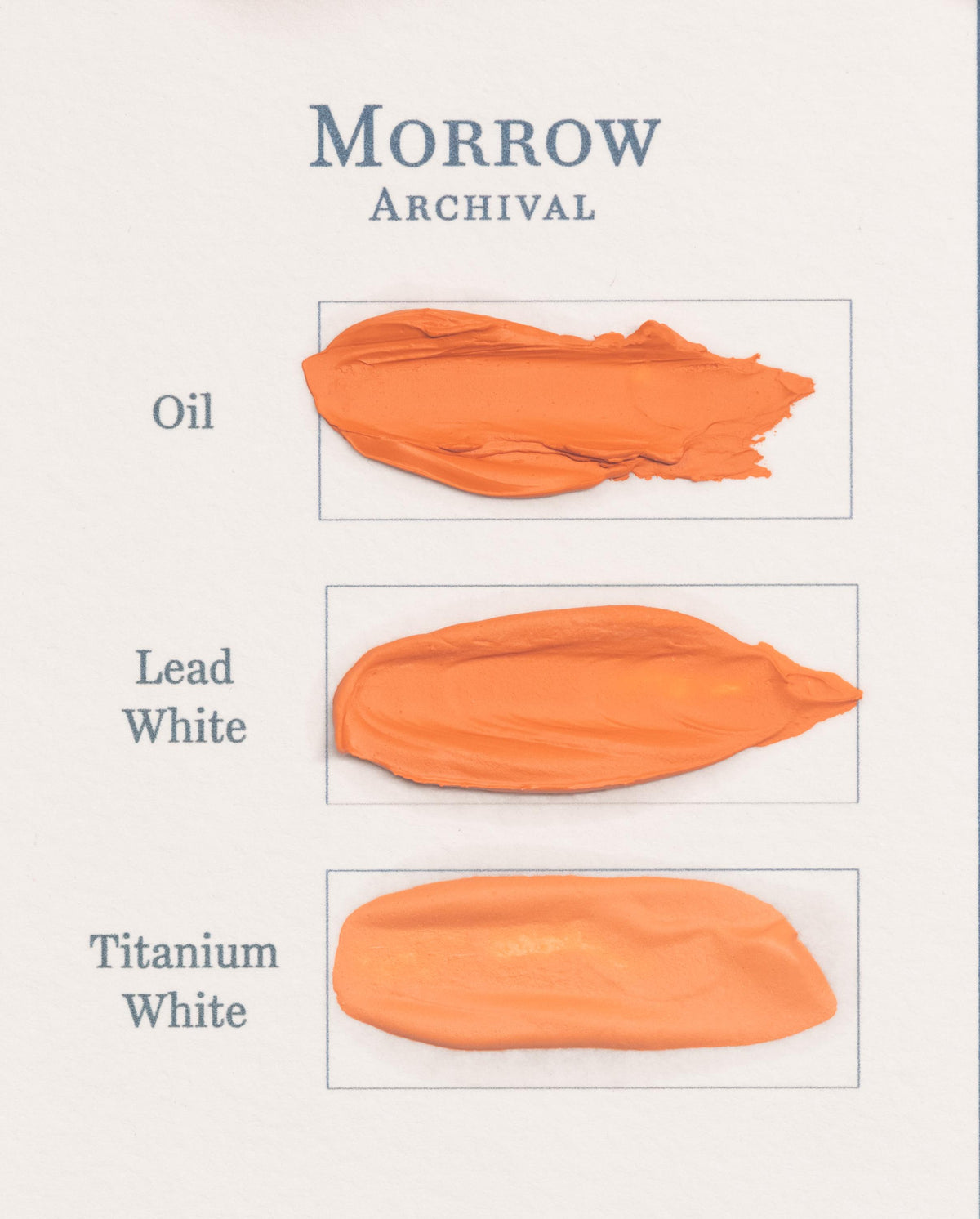
Minium, also known as Red Lead, is a heavy, opaque orange red pigment made from lead tetroxide. It produces a strong, warm red orange color with a dense mineral body and powerful covering strength. Depending on preparation and particle size, it can range from bright scarlet orange to deeper brick red or orange red tones. Compared with vermilion, Minium is warmer and more orange; compared with iron oxide reds, it is brighter, heavier, and more synthetic in character.
As a pigment, Minium is valued for its opacity, strong covering power, and brilliant warm color. Historically, it was used in manuscript illumination, panel painting, wall painting, decorative work, and protective coatings. In painting, it can create vivid orange red passages, warm highlights, underlayers, and decorative accents. It mixes well with lead white to produce salmon, coral, peach, and warm flesh tones, and with earth pigments to create deep terracotta and brick colors.
Minium is also chemically active and highly toxic because of its lead content. In oil painting, it may influence drying behavior and can react with certain materials over time. It should be handled only with strict precautions, especially as a dry pigment. It is best suited for historical reconstruction, conservation reference, and controlled studio use by artists familiar with lead pigments.
History
Minium has been known since antiquity and was one of the most important artificial red orange pigments in the ancient and medieval world. It was made by heating lead white or litharge under controlled conditions until the lead oxide converted into red lead. Its vivid color, opacity, and ease of manufacture made it a valuable pigment long before modern synthetic oranges and reds existed.
The pigment was widely used by Roman artists and craftsmen in wall painting, decorative arts, and inscriptions. In medieval Europe, Minium became especially important in illuminated manuscripts. The word "miniature" is often connected with the use of minium in manuscript decoration, where red lead was used for initials, headings, ornaments, and small painted details. Its bright orange red color made it one of the standard colors of the medieval scriptorium.
During the Renaissance and early modern period, Minium continued to be used in painting and decorative work, though artists also relied on vermilion, red ochres, lakes, and later synthetic reds and oranges. Red lead was also used in practical applications, including primers and protective coatings for metal, because lead compounds could help resist corrosion.
By the 18th and 19th centuries, Minium remained important in both art and industry, but its use in fine art gradually declined as other pigments became available. The development of cadmium orange, synthetic iron oxides, and modern organic pigments offered alternatives with different handling and safety profiles. Today, Minium is primarily of interest to conservators, pigment historians, icon painters, and artists recreating historical palettes.
CONTAINS LEAD. WEAR P100 FULL FACE OR HALF FACE PLUS GOGGLES RESPIRATOR. DO NOT SWALLOW OR INHALE. WEAR GLOVES AND DO NOT ALLOW IT TO BE ABSORBED THROUGH SKIN. P95 IS NOT SUFFICIENT.
Pigment Information
Pigment Type: Synthetic Inorganic Lead Oxide
Chemical Composition: Pb3O4, Lead Tetroxide
Suitable Mediums: Oil, Tempera, Fresco Secco, Manuscript Illumination
Lightfastness: Good to Excellent in stable conditions; may darken or alter in sulfide rich, acidic, or reactive environments
Opacity: Opaque
Other Names: Red Lead, Minium, Lead Tetroxide, Saturn Red, Orange Lead, Plumbic Plumbous Oxide
Color Index Code: PR105