


Lac Dye
Lac Dye
Couldn't load pickup availability


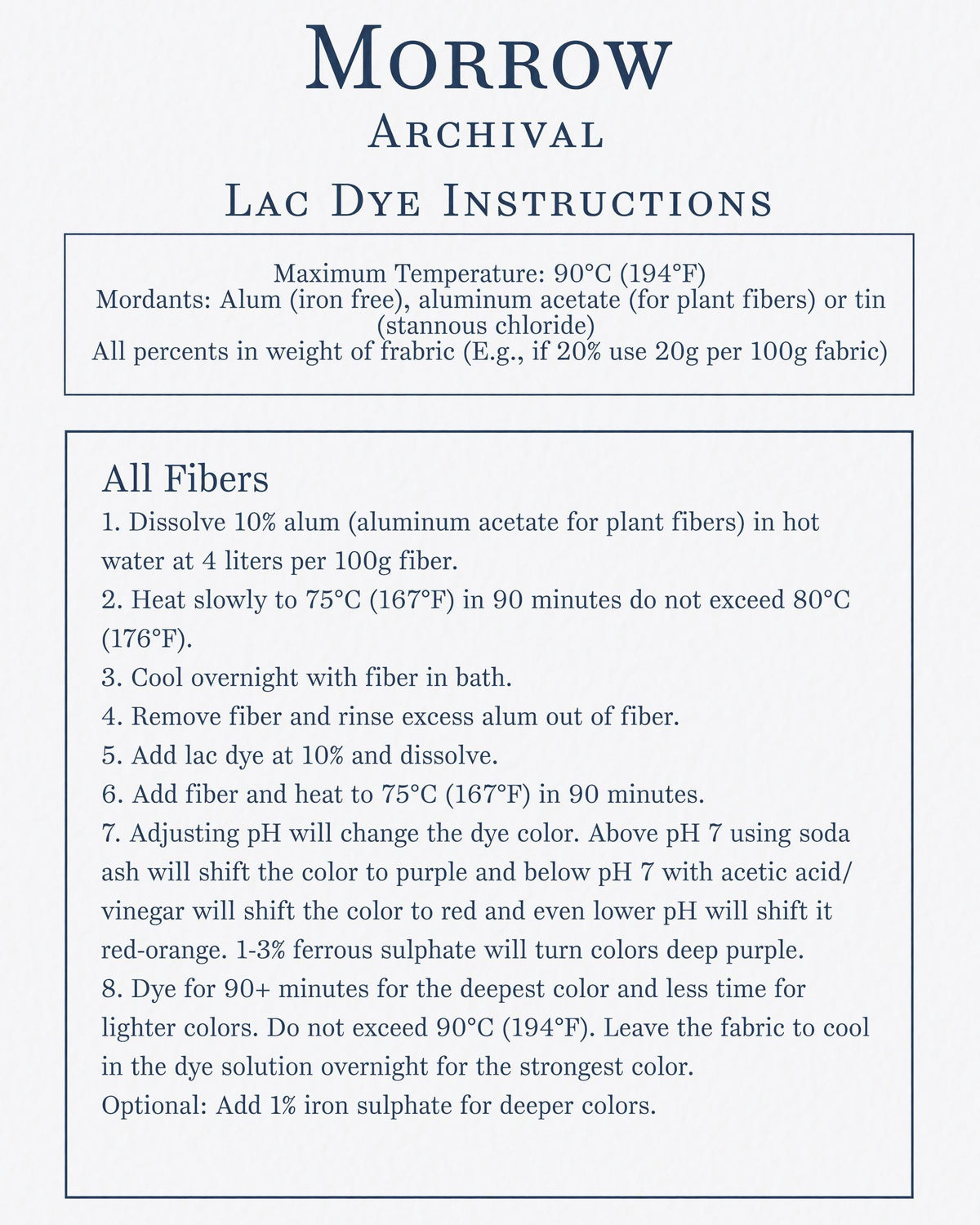
Description
Lac Dye is a luxurious natural dye derived from the resinous secretion of the lac insect (Kerria lacca), cultivated on host trees across India and Southeast Asia. This dye produces a stunning range of colors, from delicate violet pinks to rich crimson reds and deep wine tones, depending on the mordant and pH. Softer and warmer than cochineal, lac offers very good light and wash fastness on protein fibers like silk and wool.
Recommended Use
Use at 5 to 8% weight of fiber (WOF) for medium saturation. Dissolve the powder in hot water to make a paste before adding it to the dye bath. Suitable for layering or overdyeing with other natural dyes.
Historical Significance
Used for millennia in India and Southeast Asia, lac dye colored royal textiles, temple hangings, and everyday cloth. It reached Europe through medieval trade routes and was traded in great quantity during the colonial era, admired for its regal tones and lasting color. The Mochi embroidery of Gujarat, preserved in museum collections, shows the rich reds of traditional Indian textiles.
Dye Details
Name: Laccaic acid from Kerria lacca
Origin: India
Dye Type: Insect resin extract
Recommended Fibers: Silk, wool, alpaca, mohair, and blends. Works with cellulose fibers like linen, cotton, and hemp with proper mordanting.
Lightfastness: Very good on protein fibers
Mordants & Modifiers:
Alum: crimson reds and rich pinks
Tin: brighter scarlet tones
Iron afterbath (2%): deep burgundies, wine reds, plum and eggplant purples
Copper: muted violet reds
Cream of Tartar: brightens hues toward red
Citric Acid (1 to 3%): brightens hues toward red
Packaging
Available in resealable, eco friendly kraft pouches with instructions included.
Image
Embroidery of the Mochi community in Gujarat in western India from the Victoria and Albert Museum
Health and Safety
- For art use only. Not for cosmetic, food or children's use.
- Keep out of reach of children and pets. Do not eat, drink or smoke while working.
- Avoid creating or breathing dust. Work in a ventilated area and wear a NIOSH approved dust respirator (N95 or better) when handling dry pigment.
- Wear gloves and eye protection. Wash hands and work surfaces after use, and never rinse pigment into drains.
- Do not spray apply, sand or burn.
- If swallowed or if you feel unwell, contact a poison control center (U.S. 1-800-222-1222) or a doctor.
- Safety Data Sheet available on request.