


Indian Madder Dye
Indian Madder Dye
Couldn't load pickup availability


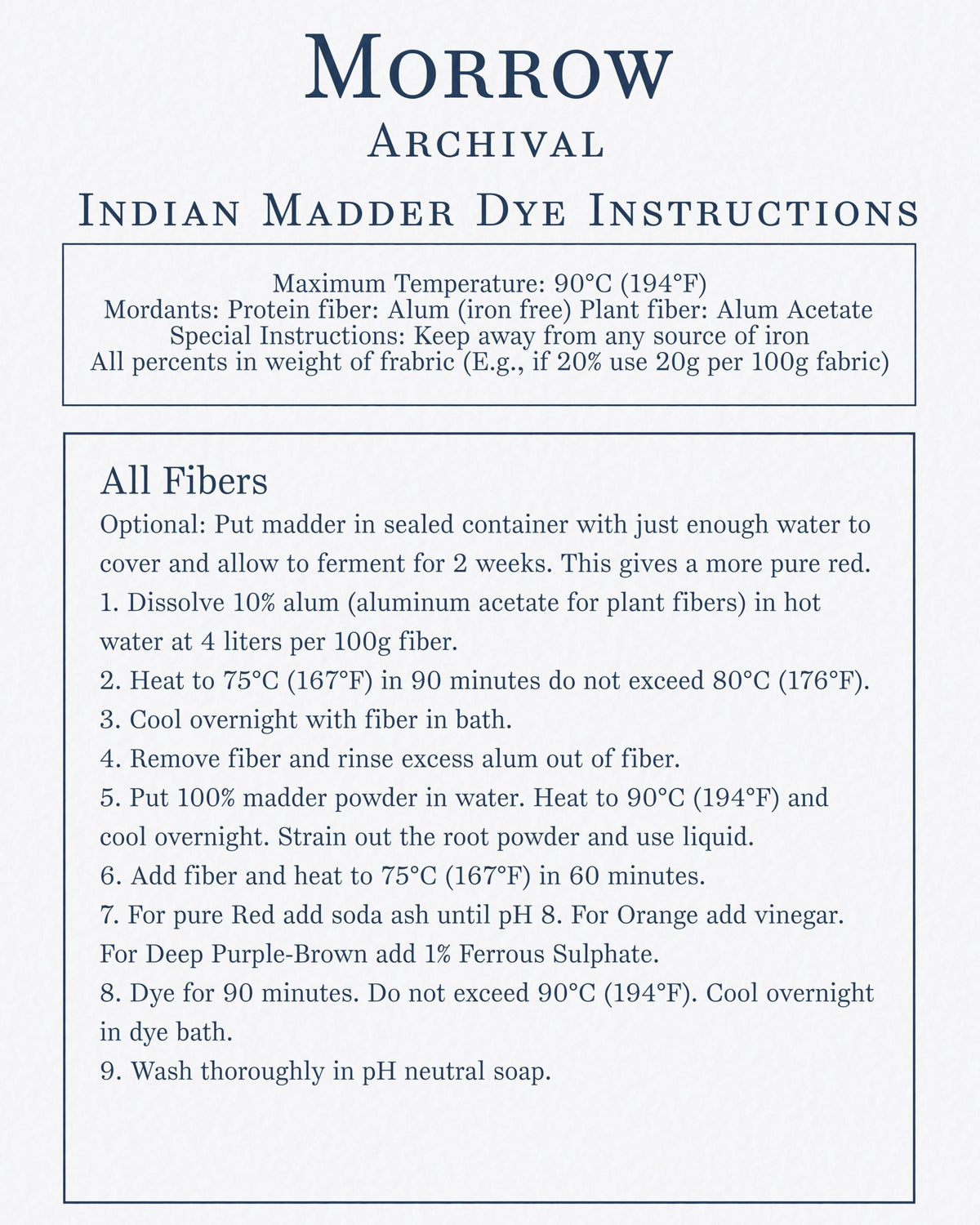
Description
Indian Madder is a treasured natural dye made from the dried and ground roots of Rubia cordifolia, a climbing plant native to the Indian subcontinent. Known for its vivid, lightfast reds, Indian Madder yields a range of hues, from coral pinks and rosewood to brick red, terracotta, and deep rust, depending on the mordant, pH, and water hardness. Its high content of purpurin and munjistin, with little alizarin, sets it apart from European madder (Rubia tinctorum), giving warmer, more orange shades that glow with natural warmth and complexity.
Recommended Use
Use at 5 to 10% WOF for medium to strong shades. Madder root needs a warm (not boiling) extraction to preserve red tones. Simmer gently and strain before adding fiber. Madder performs best on protein fibers like wool and silk, but also gives strong results on cotton and linen with proper mordanting. Hard water and chalk help deepen reds and reduce browning.
Historical Significance
Indian Madder, known as manjistha, has been used since antiquity across South Asia for temple textiles and court garments, and it remains an important herb in Ayurvedic medicine. It became a key export through ancient trade routes, and its role in the block printed and mordant painted cottons of Rajasthan and Gujarat remains central to traditional dye practice today.
Dye Details
Name: Anthraquinones from Rubia cordifolia
Origin: India
Dye Type: Botanical root dye
Recommended Fibers: Wool, silk, linen, cotton, and blends
Lightfastness: Excellent on protein fibers; good on cellulose with alum
Mordants & Modifiers:
Alum: bright reds to soft pinks
Cream of Tartar: enhances red and coral tones
Calcium Carbonate (chalk): deepens and brightens reds
Iron: deep plum browns to brick
Alkaline afterbath: shifts toward deeper reds and purples
Acidic pH (citric or acetic): shifts toward orange and coral
Packaging
Available in resealable, eco friendly kraft pouches with full instructions for extraction and color control.
Health and Safety
- For art use only. Not for cosmetic, food or children's use.
- Keep out of reach of children and pets. Do not eat, drink or smoke while working.
- Avoid creating or breathing dust. Work in a ventilated area and wear a NIOSH approved dust respirator (P100 or better) when handling dry pigment.
- Wear gloves and eye protection. Wash hands and work surfaces after use, and never rinse pigment into drains.
- Do not spray apply, sand or burn.
- If swallowed or if you feel unwell, contact a poison control center (U.S. 1-800-222-1222) or a doctor.
- Safety Data Sheet available on request.