


Crocoite Pigment
Crocoite Pigment
Couldn't load pickup availability


Description
Crocoite is a handmade natural pigment ground from crocoite, a lead chromate mineral (PbCrO₄). The mineral grows as slender, brilliant prismatic crystals of an intense orange red, and the ground pigment keeps that warmth: a saturated yellow orange, denser and more mineral textured than chrome yellow.
In use, Crocoite gives warm, glowing yellow oranges for drapery, flesh, sunsets, and decorative work, and it flows gently in a wash. It mixes with the earths for rich russets and with white for soft apricot tints. As a lead and chromate mineral it is toxic and should be handled with care, and it should not be mixed with sulfur containing pigments as it will blacken.
History
Crocoite was first described in 1766 from the Berezovsk gold mines in the Urals, and it takes its name from the Greek krokos, saffron, for its colour. Its place in the history of chemistry is secure: in 1797 Louis Nicolas Vauquelin isolated a new element from it and named it chromium, after the Greek for colour, because its compounds were so strongly coloured. Within a few decades the synthetic lead chromates, the chrome yellows and oranges, had become among the most widely used pigments of the nineteenth century.
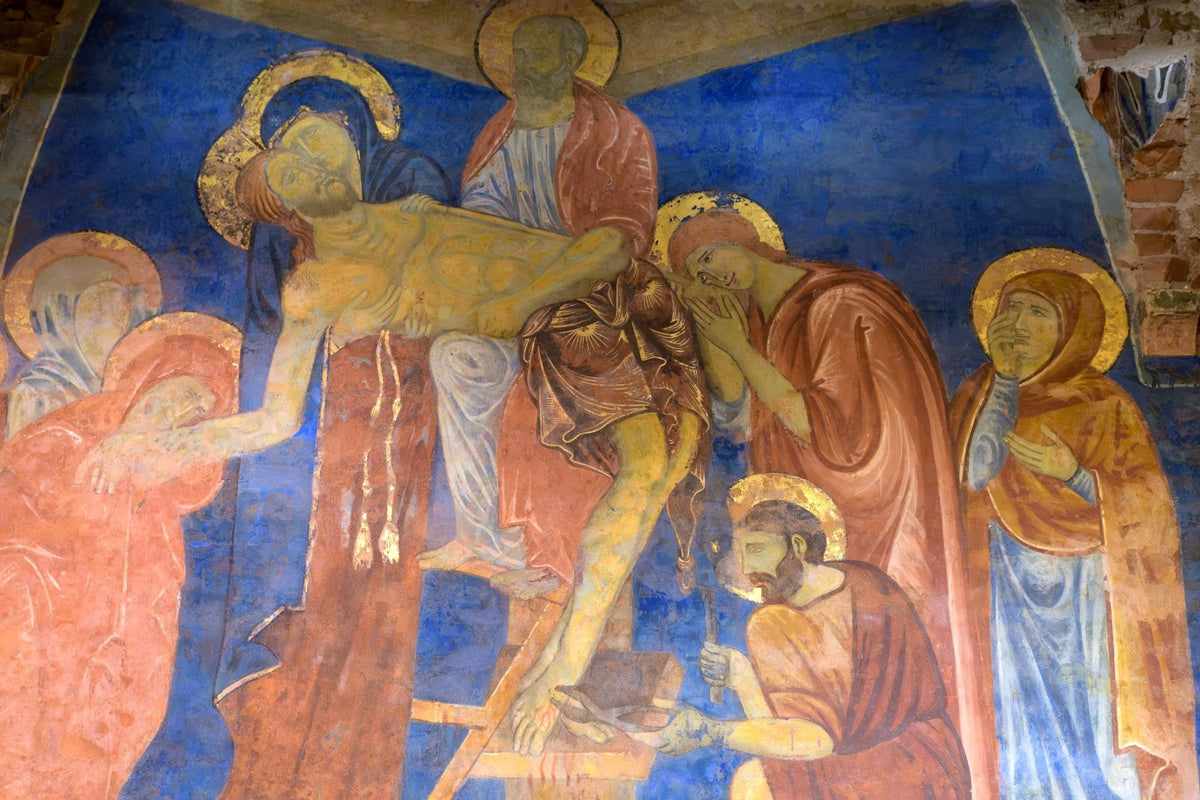
The mineral itself is far too rare to have been a common colour, but it was used rarely. Crocoite has been identified in the thirteenth century wall paintings in the crypt beneath Siena Cathedral, where it appears as a yellow in the architectural decoration of the Visitation, laid in a thin layer over the lime preparation, and mixed with red lead to make the orange halo in the Crucifixion. The finest crystals today come from Dundas in Tasmania.
Pigment Information
Pigment Type: Natural (Inorganic) lead chromate mineral
Source: Natural crocoite (PbCrO₄), crushed and ground
Origin: Russia
Suitable Mediums: Watercolor, Gouache, Oil, Tempera, Encaustic
Lightfastness: Good
Opacity: Semi-opaque
Other Names: Red Lead Ore, Lead Chromate, Siberian Red Lead
Color Index Code: N/A
Image: wall paintings in the crypt beneath Siena Cathedral
Health and Safety
For art use only. Not for cosmetic, food or children's use.
Keep out of reach of children and pets. Do not eat, drink or smoke while working.
Avoid creating or breathing dust. Work in a ventilated area and wear a NIOSH approved dust respirator (P100 or better) when handling dry pigment.
Wear gloves and eye protection. Wash hands and work surfaces after use, and never rinse pigment into drains.
Do not spray apply, sand or burn.
If swallowed or if you feel unwell, contact a poison control center (U.S. 1-800-222-1222) or a doctor.
Safety Data Sheet available on request.
Caution: Contains lead. Harmful if swallowed or inhaled. May cause cancer. May damage fertility or the unborn child and may harm breastfed children. Causes damage to the nervous system, blood and kidneys through prolonged or repeated exposure. Not for use by children or by anyone pregnant, planning a pregnancy or nursing. Never sand, spray, burn or heat dry paint. Wash hands, nails and work surfaces thoroughly after use and keep away from food. Very toxic to aquatic life; never rinse into drains. Wear a P100 respirator (full face, or half face with goggles) when handling the dry pigment; N95 and P95 masks are not sufficient.
Caution: Contains hexavalent chromium (chromate). May cause cancer. May cause allergy or asthma symptoms if inhaled and an allergic skin reaction. Harmful if swallowed or inhaled. Avoid all dust and skin contact and wear gloves. Not for use by children or by anyone pregnant. Very toxic to aquatic life; never rinse into drains.
WARNING: This product can expose you to lead, which is known to the State of California to cause cancer and birth defects or other reproductive harm. For more information go to www.P65Warnings.ca.gov.