


Calendula Marigold Dye
Calendula Marigold Dye
Couldn't load pickup availability


Description
Calendula, also known as pot marigold, yields a soft, glowing yellow dye from its golden orange flower heads. Beloved for its cheerful, gentle tones, Calendula officinalis produces buttery yellows, honey golds, and warm straw tones, especially on protein fibers like wool and silk. While less intense than dyes like weld or fustic, calendula gives a natural radiance and softness ideal for botanical layering, overdyeing, or subtle tonal work.
Recommended Use
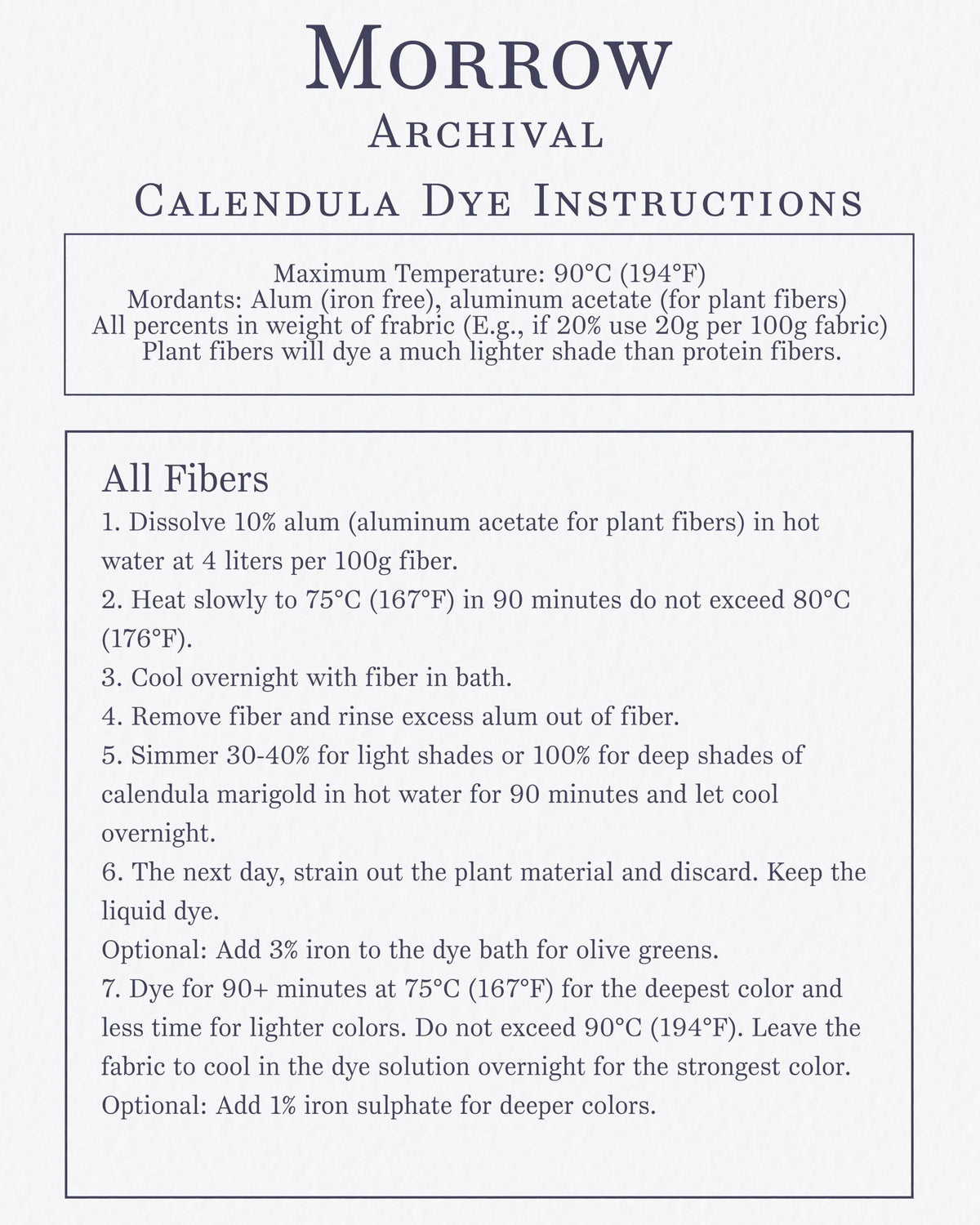
Use at 50 to 100% WOF for a medium to strong shade. Make the dye bath by simmering the dried flower heads in water for 30 to 60 minutes, straining, and then adding pre mordanted fiber. Yields the best results with alum mordant on protein fibers. Works on cotton and linen with pre treatment, but tends toward pale color unless layered or combined with tannin rich dyes.
Historical Significance
Calendula has a long place in both apothecary and dye gardens. Grown across Europe and the Mediterranean since antiquity, it was used to color cloth, cheese, and butter with its soft yellow. While rarely used for commercial dyeing because of its lower dye yield, it was valued in home and folk dyeing for its accessibility, ease of cultivation, and warm, gentle hues. Its English name, marigold, comes from "Mary's gold," linking the flower to the Virgin Mary.
Dye Details
Name: Flavonoid rich extract from Calendula officinalis
Origin: Europe or North America (depending on harvest)
Dye Type: Botanical flower dye
Recommended Fibers: Wool, silk, alpaca, cotton, linen, and bast fibers
Lightfastness: Moderate to good on protein fibers; fair on cellulose
Mordants & Modifiers:
Alum: bright golden yellow
Iron: soft olive and mossy greens
Cream of Tartar: shifts toward pastel, buttery tones
Copper: adds coolness and deepens tone slightly
Tannin underlayer (oak, gall): improves depth and fastness on plant fibers
Packaging
Available in resealable, eco friendly kraft pouches. Instructions included for extraction and color variation techniques.
Health and Safety
- For art use only. Not for cosmetic, food or children's use.
- Keep out of reach of children and pets. Do not eat, drink or smoke while working.
- Avoid creating or breathing dust. Work in a ventilated area and wear a NIOSH approved dust respirator (P100 or better) when handling dry pigment.
- Wear gloves and eye protection. Wash hands and work surfaces after use, and never rinse pigment into drains.
- Do not spray apply, sand or burn.
- If swallowed or if you feel unwell, contact a poison control center (U.S. 1-800-222-1222) or a doctor.
- Safety Data Sheet available on request.