

Purpurissum Murex Purple Pigment
Purpurissum Murex Purple Pigment
Couldn't load pickup availability


Description
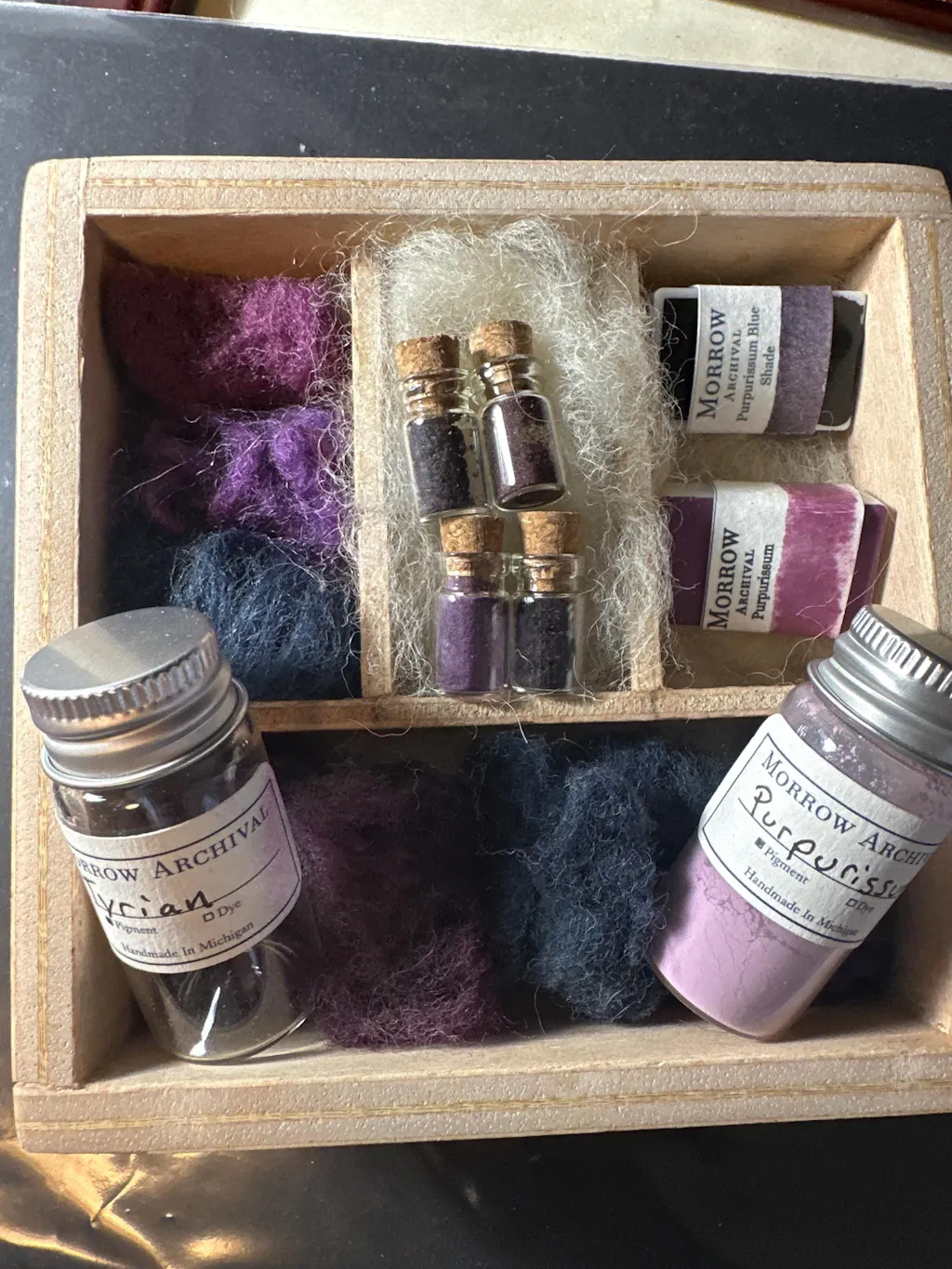
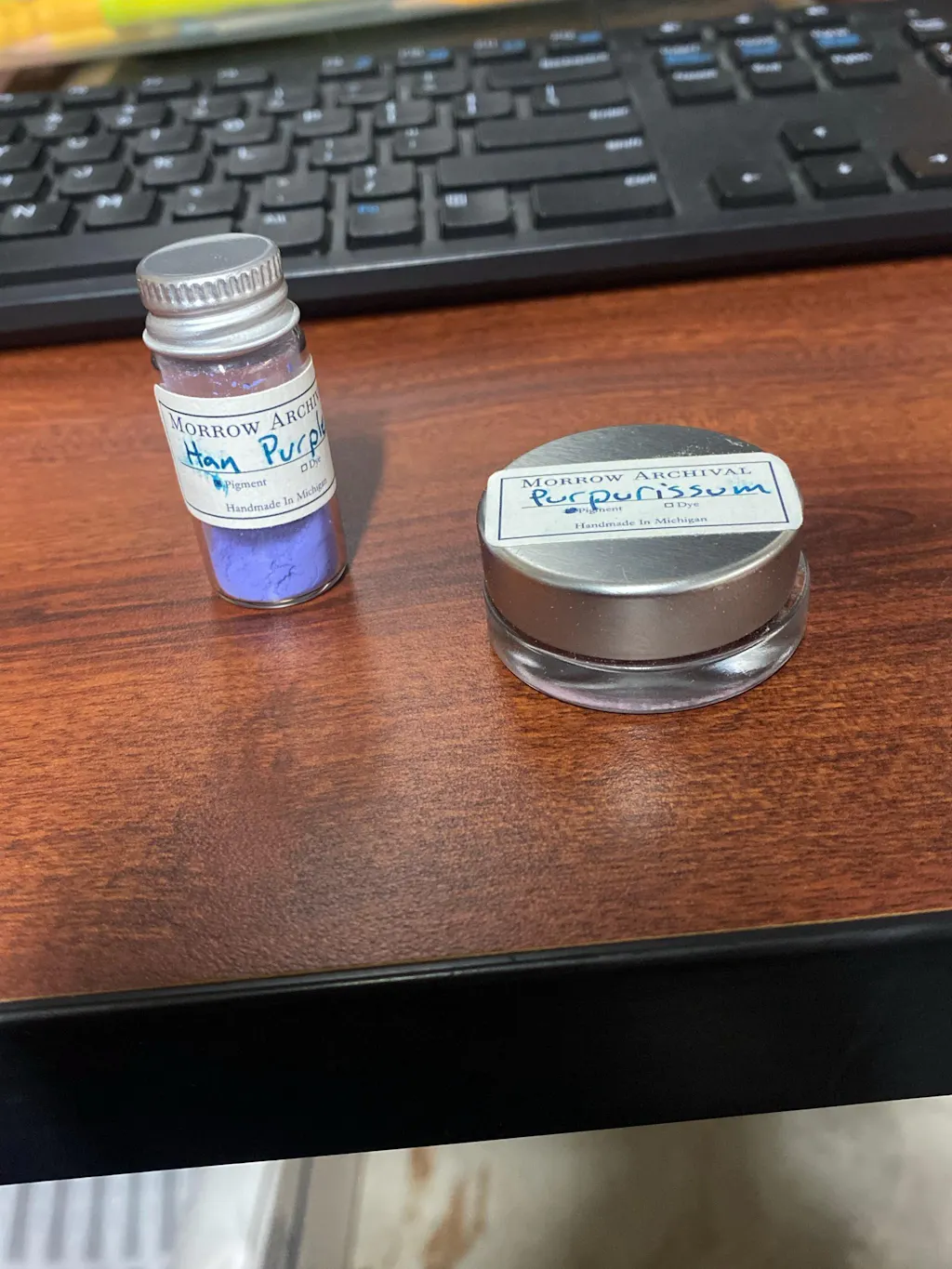
Purpurissum is a handmade natural pigment made through an ancient process described by Pliny the Elder in Naturalis Historia. It is a type of lake pigment created by dyeing finely ground marble dust with Tyrian Purple (extracted from Murex Trunnculus sea snails). The result is a rich purple pigment that has been used since antiquity in painting, manuscript illumination, and textile dyeing. Unlike direct Murex dyes, which were primarily used for textiles, Purpurissum was formulated to be a stable lake pigment suitable for painting.
Purpurissum has a warm, soft purple tone that is a soft violet. It is highly prized for its historical significance and unique color variations, making it an important pigment for historical reconstructions and fine art applications.
Purpurissum has high lightfastness similar to mineral-based pigments and when carefully prepared and protected from excessive exposure, it remains a valuable and rare historical pigment. Its use in traditional binders such as egg tempera, gum arabic, or oil allows for its application in various painting techniques.
History
Purpurissum was one of the most prestigious pigments of the ancient world, closely associated with Roman, Greek, and Byzantine art. The production of this pigment was an attempt to make the costly and highly regulated Tyrian Purple more accessible for artistic use. While pure Tyrian Purple was reserved for imperial garments and official insignia, Purpurissum allowed artists to incorporate the revered color into paintings, frescoes, and manuscript decorations.
Pliny the Elder, writing in the 1st century AD, describes the process of making Purpurissum by steeping white earth or chalk in the dye extracted from the Murex snail. This method allowed the dye to be transformed into a stable, usable pigment. It was particularly used in Roman frescoes and Byzantine iconography, where its deep, luxurious hues symbolized wealth, power, and divine authority.
During the Middle Ages, Purpurissum continued to be used in manuscript illumination, especially for religious texts and imperial documents. Its rarity and expense led to its decline after the fall of the Byzantine Empire, and it was eventually replaced by synthetic and plant-based purples such as madder and cochineal lakes. However, interest in Purpurissum has revived in historical pigment research and traditional painting practices. In the pictured art work, German born artist, Inge Boesken Kanold is shown with some of her paintings featuring extensive use of Purpurissum and Tyrian Purple creating the beautiful and unmatched royal purples throughout.
Pigment Information
Pigment Type: Natural (Animal-based lake pigment) from Murex dye on a mineral substrate (chalk, clay, or gypsum)
Suitable Mediums: Watercolor, Oil, Tempera, Acrylic, Encaustic, Cold Wax, Casein, Milk, Swedish Flour, Lime / Fresco
Lightfastness: Excellent
Opacity: Semi-transparent
Other Names: Tyrian Purple Lake, Imperial Purple, Roman Purple
Color Index Code: NV1
Image: Various by Inge Boesken Kanold